
Eco-Art-Land
Connect, create, and conserve. A marketplace for artists to buy, sell, and showcase while promoting sustainability.
Role:
UI/UX Designer
Timeline:
Oct 2023 - Feb 2024
Highlights:
Artist community
Secondhand art supplies
Environmentally focused events
Bridging the gap between artists and sustainability
Team:
2 UI/UX Designer, 3D Designer
Tools:
Figma

Category:
UX Design, Service Design, Web Design, Responsive Design
Problem:
Creative individuals lack a dedicated platform for buying, selling, exchanging, and donating art materials. As a result, reusable supplies are frequently discarded, artists face financial barriers to obtaining materials, and opportunities for community-driven resource sharing are limited.
What is Eco Art Land?

Our Solution:
Eco-Art-Land provides a specialized marketplace and community platform where artists can exchange unused art supplies, discover affordable materials, showcase their work, and connect with other creatives, supporting both sustainability and accessibility in the art ecosystem.
Interactive Prototype:

Reseach & Analysis:
My design process began with a comprehensive competitor analysis. This initial phase involved evaluating established companies in the space, focusing on those with similar target audiences and functionalities.
Key insight? No direct competitor focuses on sustainable art, recycled materials, and the artist community. Existing platforms offer elements (Etsy: sustainability, Vinted/DeviantArt: community) but lack a dedicated niche.


What we learned from users:
Insights gathered from interviews with artists, students, and creative professionals about their experiences, challenges, and expectations.
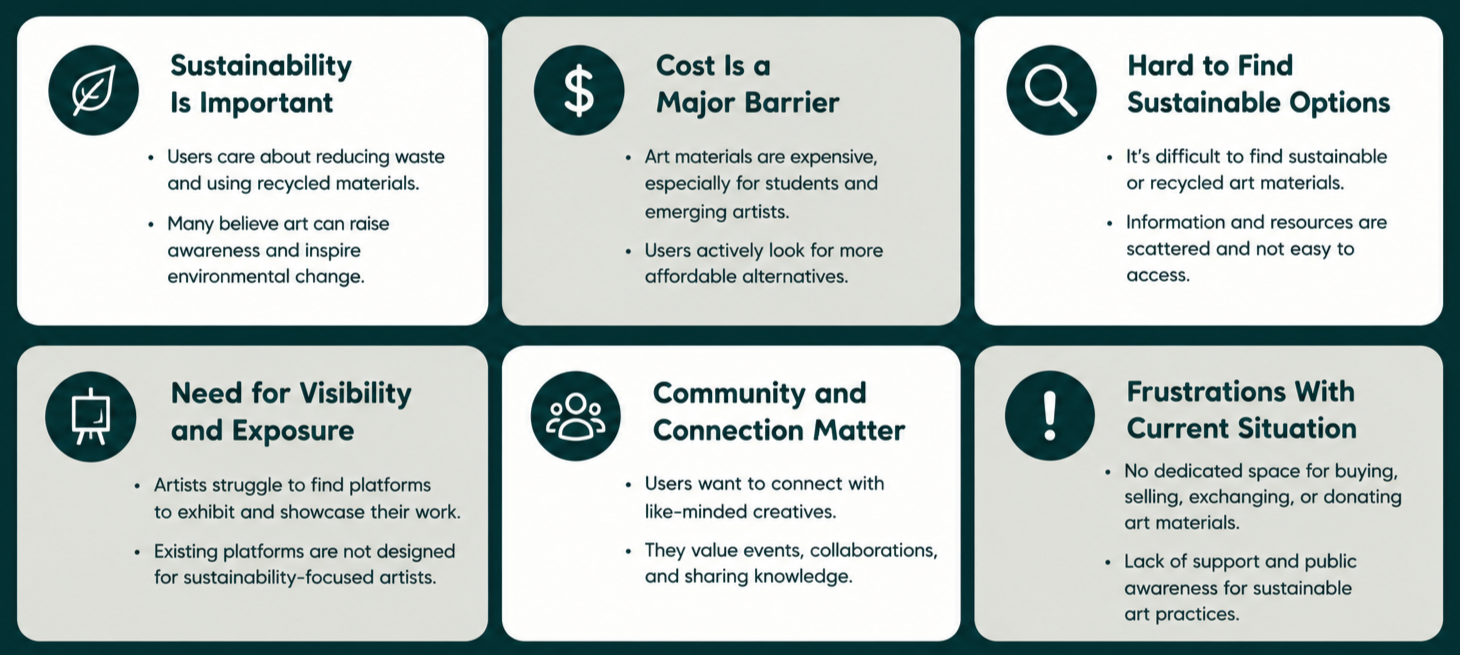
Key Takeaway
Users need an accessible, trustworthy, and community-driven platform that makes sustainable art materials easy to discover, exchange, and celebrate-while empowering artists and promoting positive environmental impact.

Derived from user interviews and research insights, these opportunities guided our ideation process.
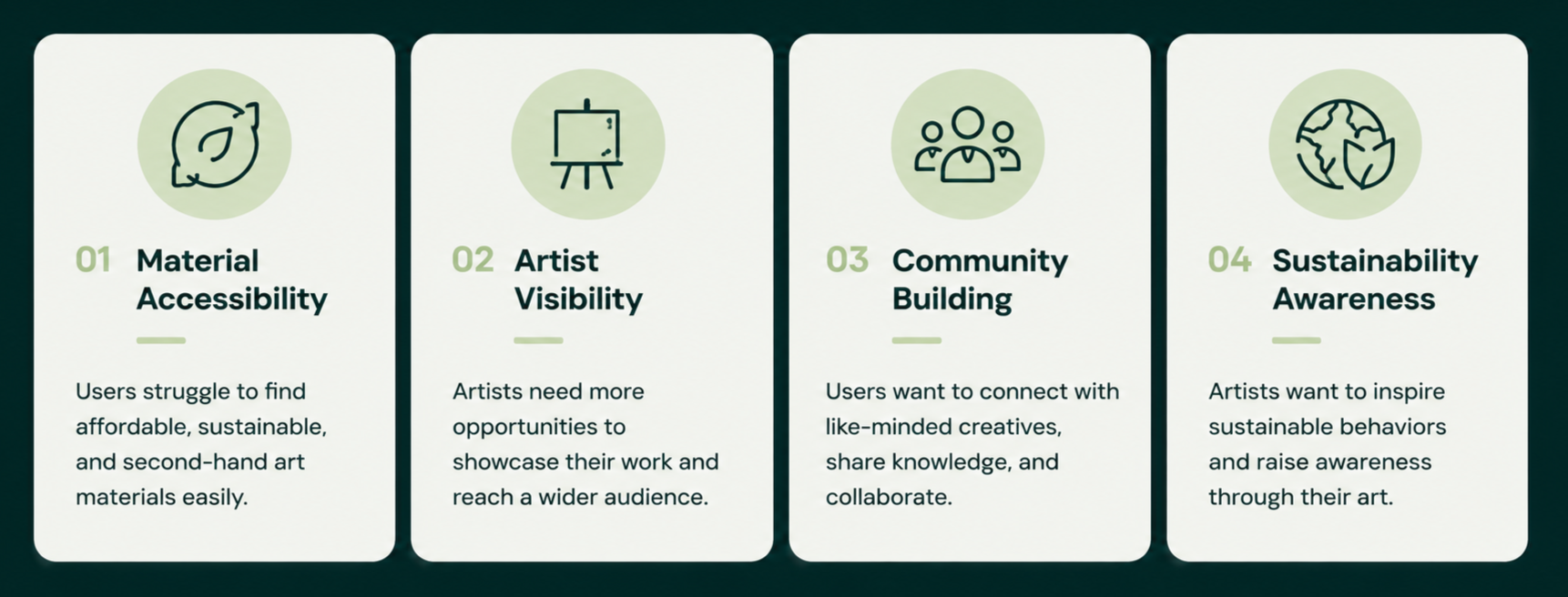


Key Design Opportunities:
Brainstormed Ideas:
We brainstormed ideas to address the challenges faced by artists in accessing sustainable materials and growing their impact.
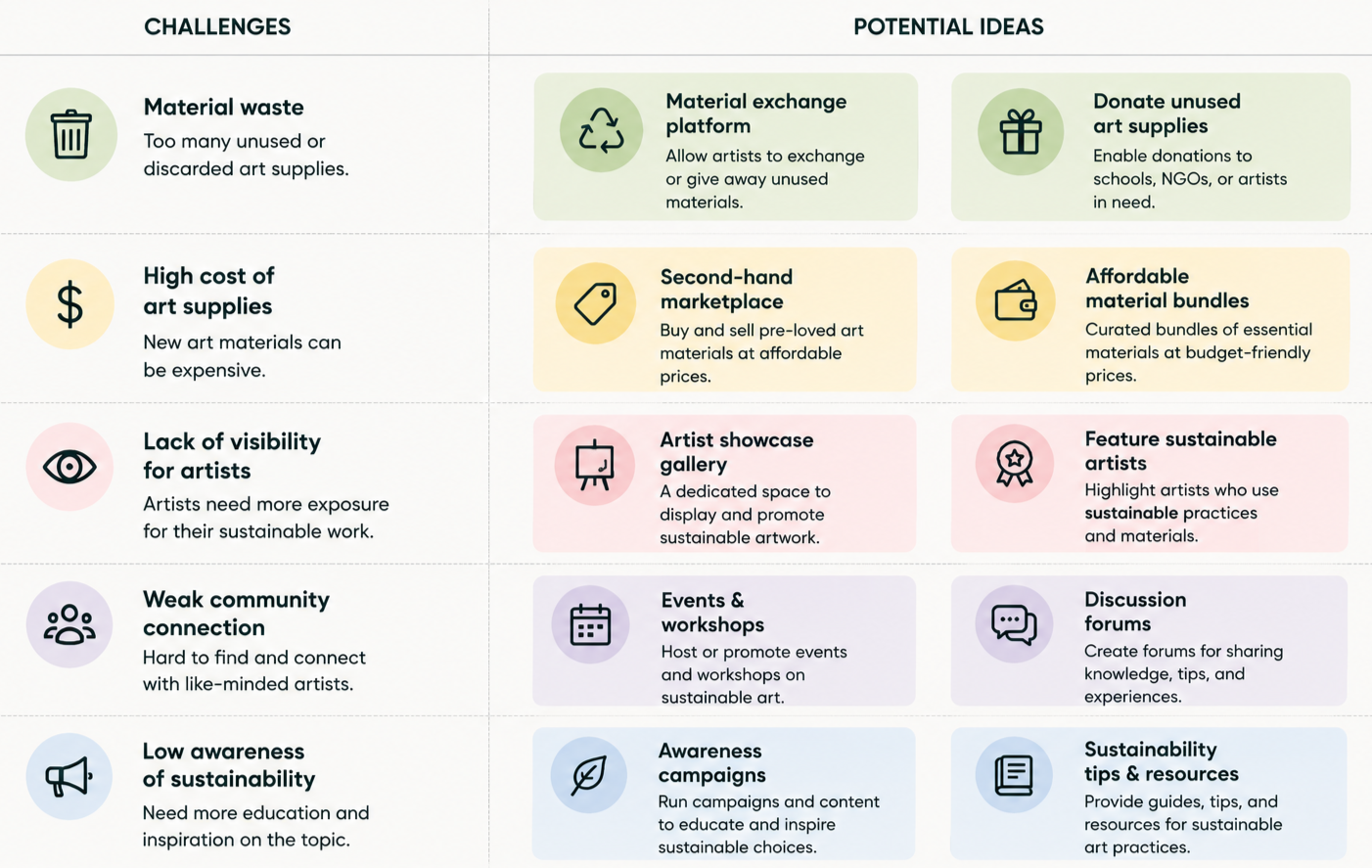
Concept Development:
Based on user interviews, we explored multiple directions for supporting sustainable artists. Early ideation revealed that users needed more than access to affordable materials. They also wanted visibility, community, and opportunities to participate in sustainability-focused events.
Concept 1
Sustainable Marketplace
Focus
Buy materials
Sell materials
Exchange materials
Addresses
Material accessibility
Cost barriers
Limitation
Does not support artist visibility or community building



Concept 2
Artist Community Platform
Focus
Artist profiles
Messaging
Events
Workshops
Addresses
Networking
Collaboration
Limitation
Does not solve material waste and accessibility challenges


Selected Concept
Concept 3
Sustainability Hub
Focus
Sustainability education
Resource sharing
Awareness campaigns
Addresses
Environmental awareness
Limitation
Limited practical value for acquiring or exchanging materials

Hybrid Service Ecosystem
The best of all three concepts.
Combines a marketplace, artist showcase, and community engagement to create a circular ecosystem that supports both practical needs and meaningful connections.
Marketplace
Buy, Sell, Exchange
Events & Workshops
Participate, Grow, Inspire
Artist Showcase
Exhibit, Promote, Get Discovered
Community
Connect, Learn, Collaborate
This integrated approach addresses the largest number of user needs while driving positive environmental and social impact.
From Concept to Experience
After defining the Hybrid Service Ecosystem as the final concept, we needed to understand how users, touchpoints, and supporting services would work together to deliver a cohesive experience. To achieve this, we mapped the customer journey alongside a simplified service blueprint, allowing us to visualize both the user-facing experience and the operational processes required behind the scenes. This exercise helped identify key interactions, service dependencies, and opportunities to create a seamless and sustainable ecosystem for artists and the creative community.
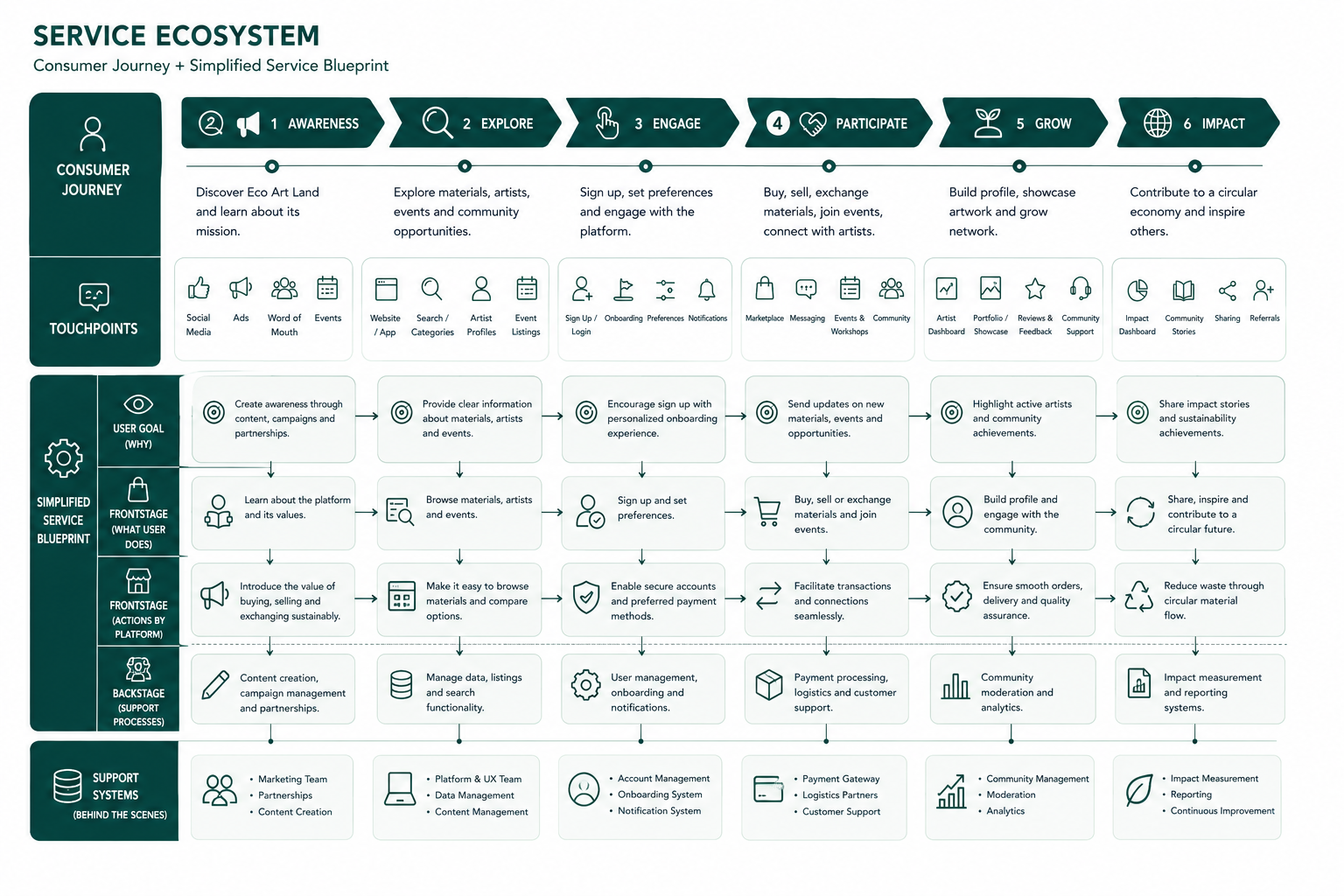

Designing the Experience:
This initial prototyping stage would focus on quickly creating a basic version of the platform to test core functionalities and user flows. It wouldn't be visually polished, but it would allow for early feedback on the platform's layout, navigation, and key features.


Crafting the Visual Identity:
Strong visuals are a website's secret language. Chosen colors, layouts, and imagery can instantly communicate a brand's personality and message. A website with a cohesive visual identity, where all elements work together seamlessly, creates a sense of familiarity and trust for visitors. This consistency makes the website more memorable, leaving a lasting impression that strengthens brand recognition.




Bringing the Vision to Life:
With the service ecosystem and experience structure established, I translated the concept into a cohesive digital product. Through iterative interface design, I focused on creating an intuitive, visually engaging, and accessible experience that supports material exchange, artist visibility, community engagement, and sustainability. The final design brings together user needs, business goals, and environmental values into a unified platform experience.


Validating the Experience:
The usability test results indicate a positive user experience for the artist sign-up and profile-making process. However, there are areas for improvement to enhance the clarity and discoverability of features. Additionally, incorporating post-signup tutorials and features highlighting the use of second-hand materials could further engage artists and showcase the platform's unique value proposition.


Creating Value:

Promoting Sustainability
Created a platform that encourages the reuse, exchange, and donation of art materials, helping reduce unnecessary waste.

Strengthening Community
Fostered collaboration through events, workshops, messaging, and community-driven interactions.

What I Learned:
Insight
Sustainability alone wasn't enough
Artists wanted visibility
Material exchange required trust
User needs were interconnected

Supporting Artists
Provided artists with opportunities to showcase their work, increase visibility, and connect with potential buyers.

Improving Accessibility
Made art materials more affordable by facilitating the exchange and resale of second-hand supplies.
Design Response
Added community features
Created artist showcase
Added profiles and messaging
Developed a hybrid ecosystem