Haven
A family-centered mobile experience that helps people prepare for sever weathers and travel, and make safer, calmer decisions when stranded.
Role:
UI/UX Designer
Timeline:
Aug 2025 - Oct 2025
Highlights:
Fast access to emergency assistance
Child-friendly reassurance through Kids Mode
Personalized family emergency checklists
Actionable weather and travel alerts
Team:
1 UI/UX Designer
Tools:
Figma
Category:
UX Design, Service Design, Web Design, Responsive Design
Problem:
Snowstorms can turn an ordinary family trip into a prolonged emergency. When roads close or vehicles become immobilized, families must simultaneously manage freezing conditions, limited food and fuel, a draining phone battery, unreliable communication, and frightened children. Existing solutions address individual parts of the experience. Families still lack one coordinated system that helps them prepare before departure and guides them when conditions become critical.
What is Haven?
Haven is a family-centered snowstorm preparedness and emergency-support application. It combines weather awareness, personalized supply checklists, vehicle-safety guidance, emergency actions, battery conservation, and child-friendly calming activities in one connected experience.
Rather than treating preparedness and emergency response as separate moments, Haven supports the family throughout the journey, from planning a trip to seeking assistance when stranded.
Help everyday families, not trained survivalists, move from last-minute reaction to guided preparation and confident action.
Learning From Real Winter Emergencies
To understand how families respond when winter travel plans fail, I analyzed seven documented snowstorm experiences. I examined the conditions people faced, the emotions they experienced, the resources available to them, and the coping strategies they improvised.
The cases revealed that snowstorm emergencies rarely involve one isolated problem. Cold, communication failure, limited supplies, battery loss, transportation disruption, and emotional distress reinforce one another.
Selected Stories
Long Island, New York: Priscilla Arena was stranded on a snow-covered highway for 12 hours and feared she might not return to her husband and children.
Atlanta, Georgia: A mother trapped with three children had very limited childcare supplies and used songs and games to keep them calm.
Kansas, I-70: A family remained stranded for 24 hours, sheltered under blankets, lost phone reception, and ran the vehicle for only 10 minutes each hour to conserve fuel.
Scotland: A couple crashed during a whiteout and could not activate the vehicle’s SOS system after losing phone service.
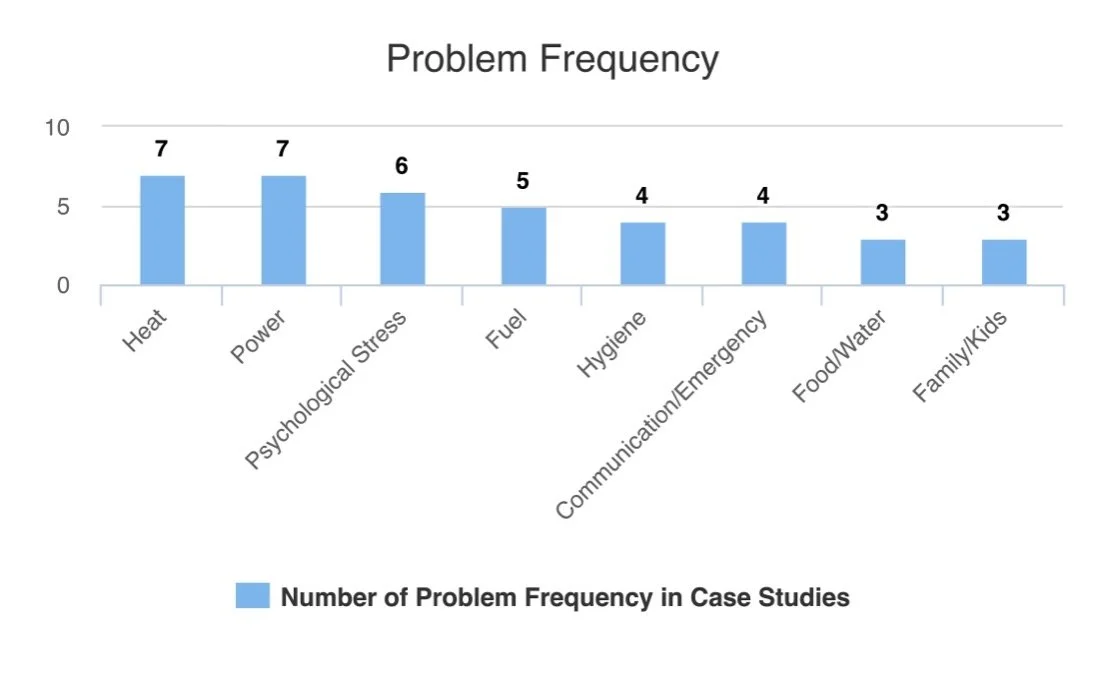
Research Patterns
Staying warm was one of the most frequent and urgent concerns.
People relied on improvised, low-technology coping strategies.
Communication became unreliable precisely when help was most necessary.
Parents had to manage children’s fear while making critical safety decisions.
Families frequently lacked essential or family-specific supplies.
The most effective opportunity begins before family enters dangerous conditions.
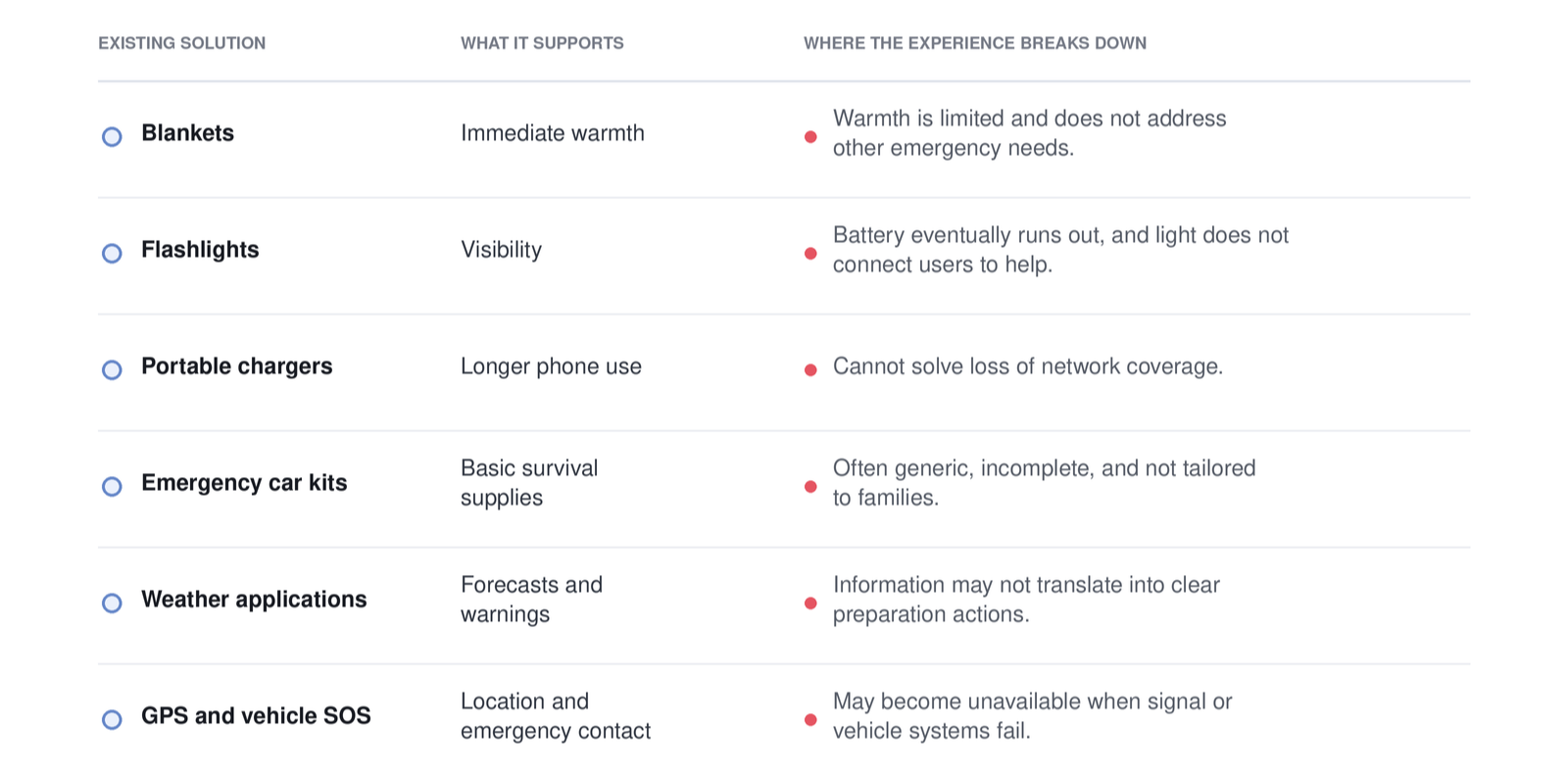
Learning From Existing Solutions
Market Opportunity
Families do not need another isolated emergency product. They need a connected experience that turns information into preparation and keeps the most important actions accessible during a crisis.
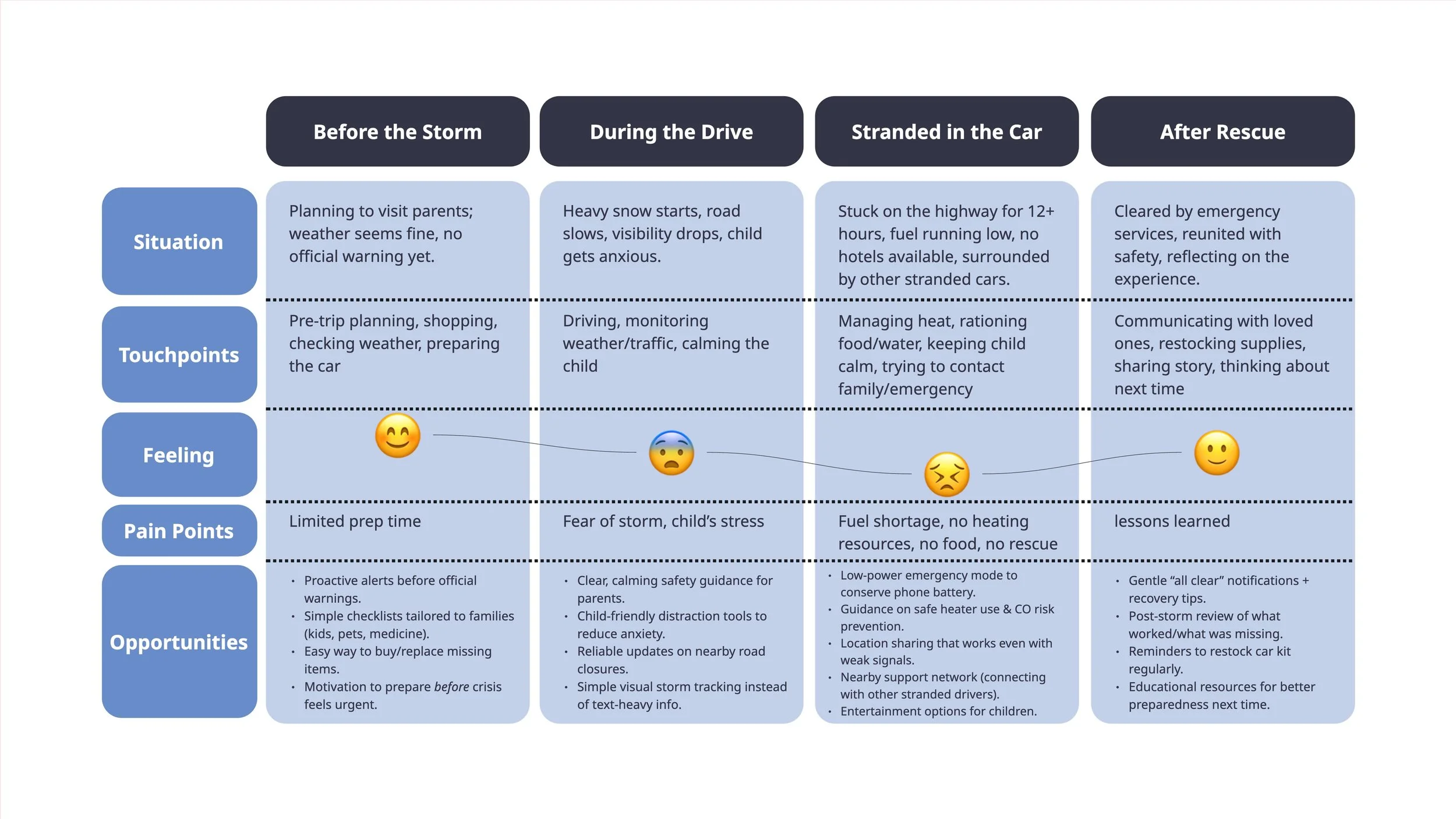
From Warning to Rescue
Families need support that begins before severe weather and remains understandable when attention, power, supplies, and connectivity become limited.
How Might We…
How might we help everyday families prepare before severe winter weather and quickly access critical safety, communication, and emotional-support tools when stranded?
Exploring Survival Beyond a Mobile Screen
During ideation, I explored a wide range of responses to the physical and emotional challenges of being stranded, including heated clothing, portable sanitation, emergency supplies, communication tools, and child-support ideas.
This broad exploration revealed that the root problem was not one missing object. Families needed better preparation, clearer guidance, and coordinated access to multiple forms of support.
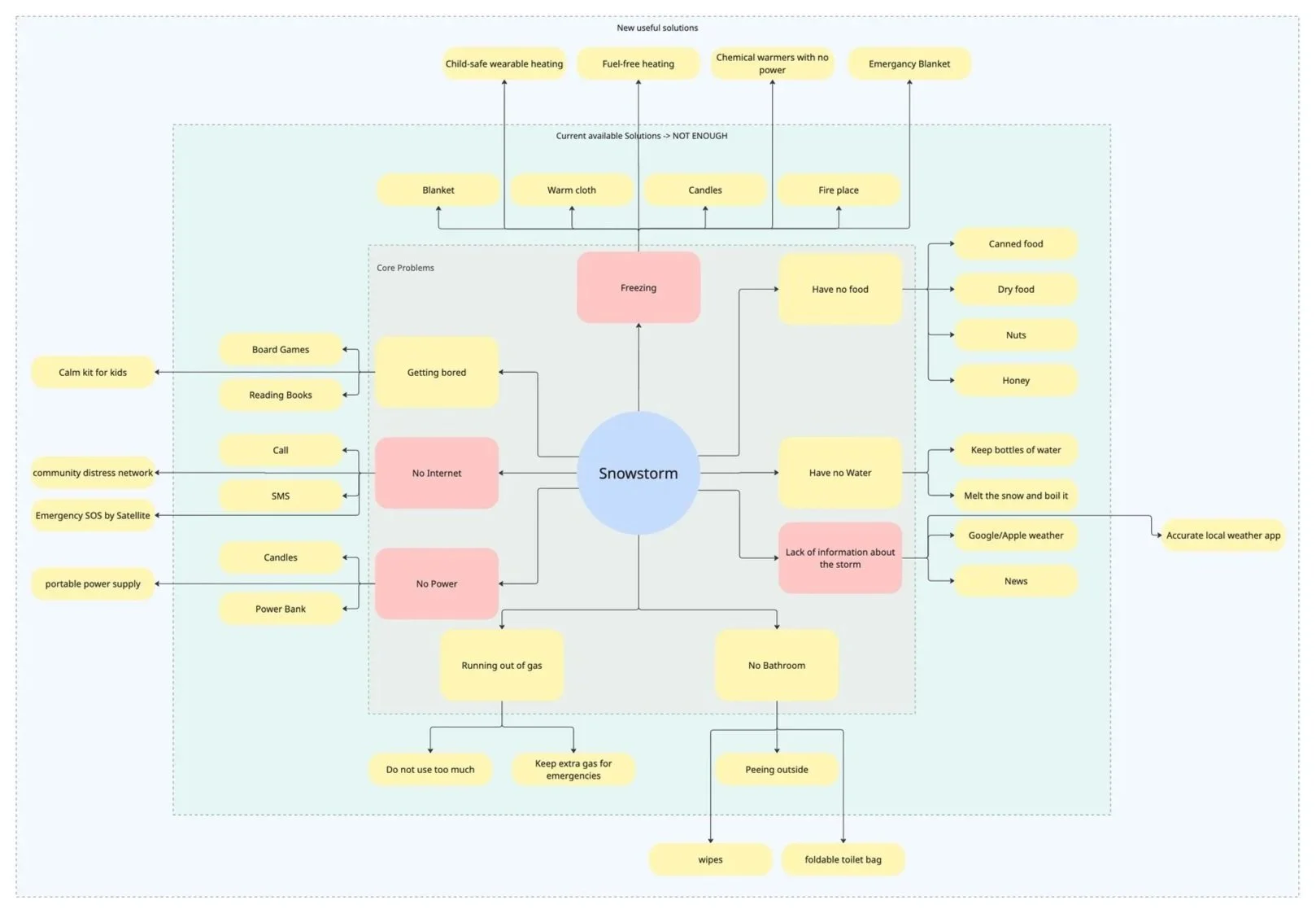
Selected Direction
Haven was developed as an integrated mobile concept connecting four layers of the emergency experience:
Prepare
Alerts and family-specific supply checklists
Navigate
Weather, map, and vehicle-safety information
Respond
Emergency actions and battery conservation
Reassure
Kids Mode and emergency contacts
From Structure to Interaction
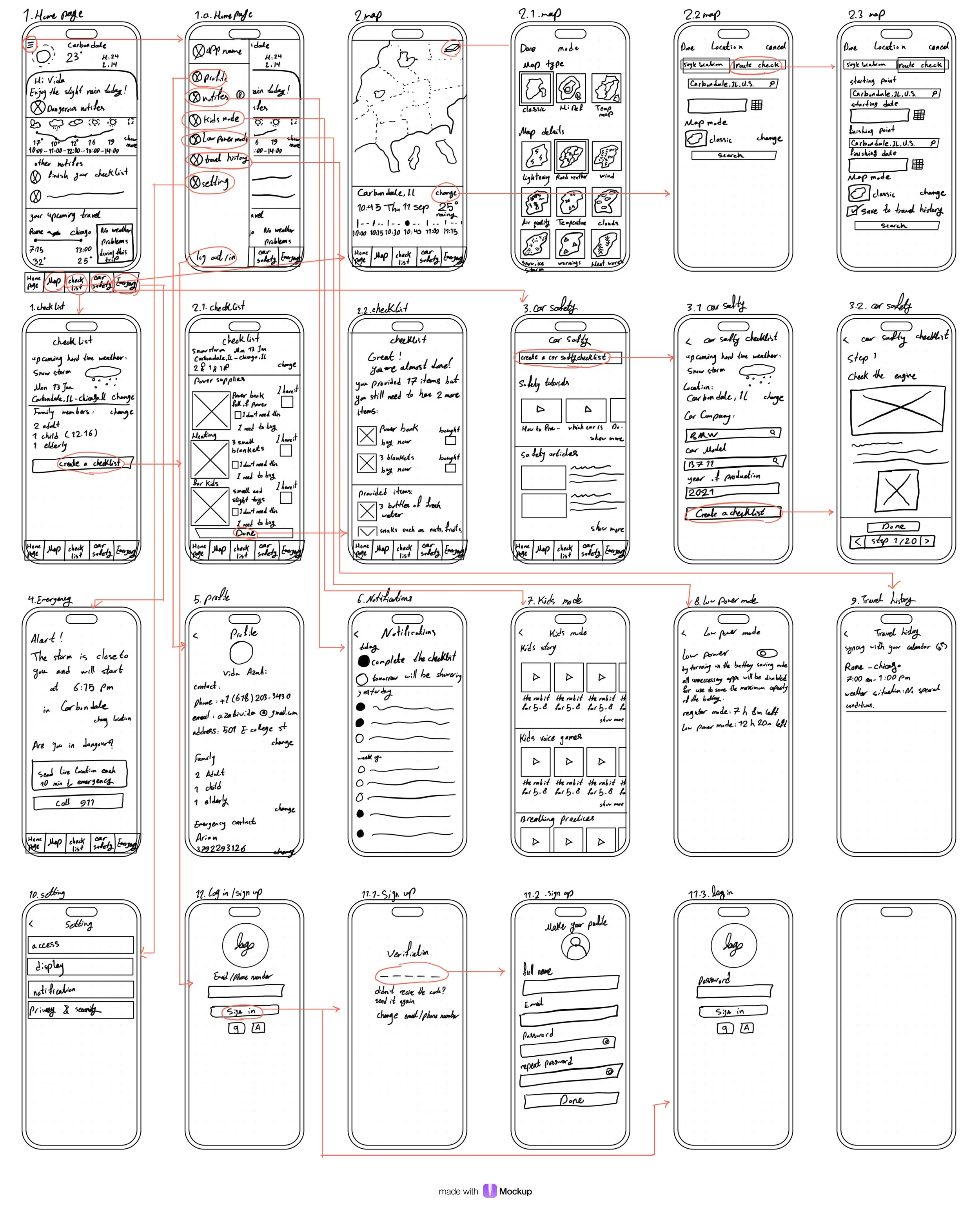
I used low-fidelity wireframes to organize the application’s primary flows and establish the hierarchy of critical actions before introducing visual styling.
Personalized Checklist Flow
Family and location details → Generate checklist → Review recommended items → Mark “I have it” or “I need to buy” → Complete preparation
Emergency Flow
Receive critical warning → Open Emergency → Share live location at regular intervals or call 911 → Activate Low Power Mode when necessary
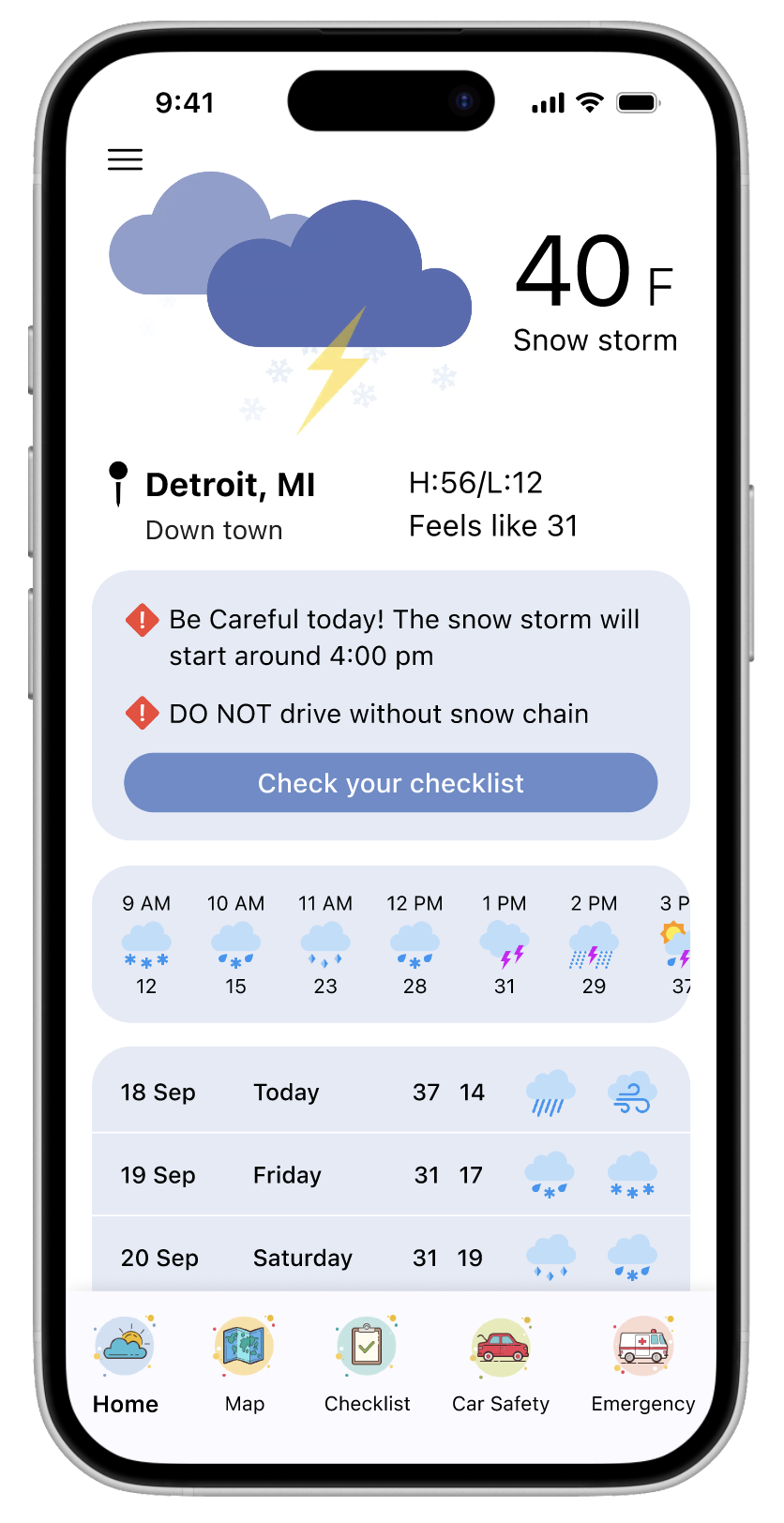
Preparing Before Departure
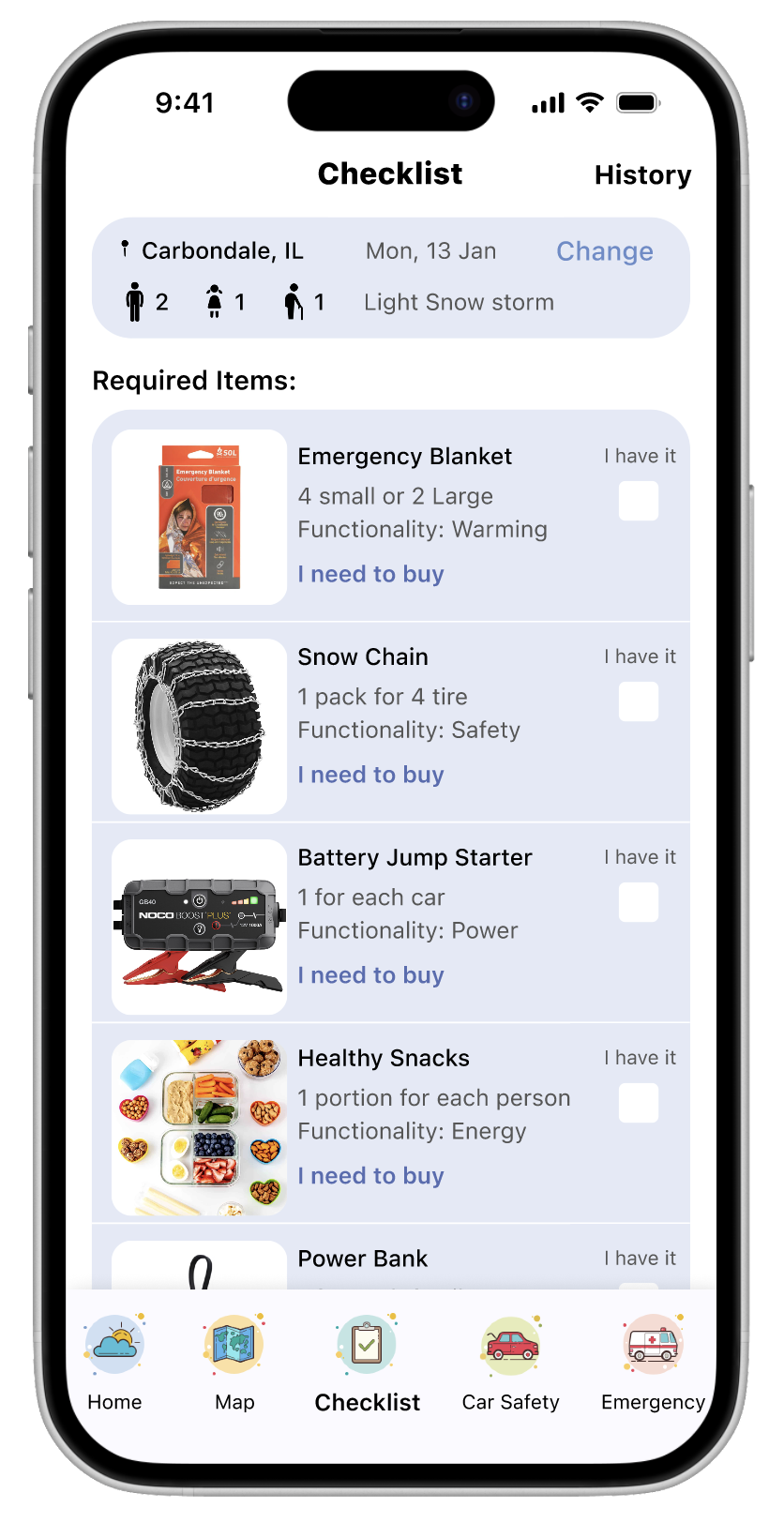
Building a Checklist Around the Family
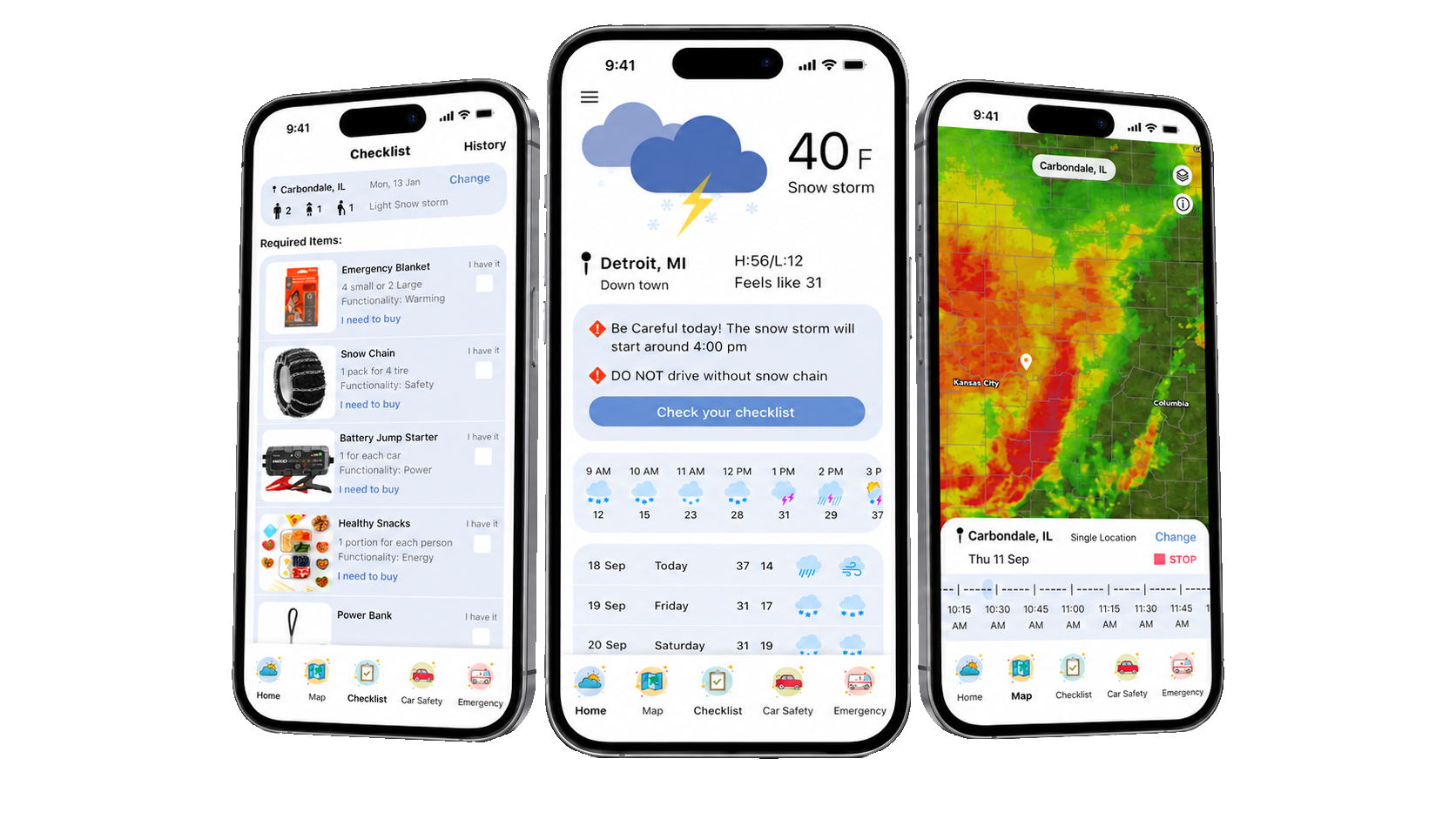
The Home screen transforms weather information into clear actions. It presents the current location, urgent alerts, temperature, daily and hourly forecasts, and upcoming travel information.
Instead of only announcing a storm, messages such as a predicted start time and snow-chain warning help the family understand what the conditions mean for their trip.
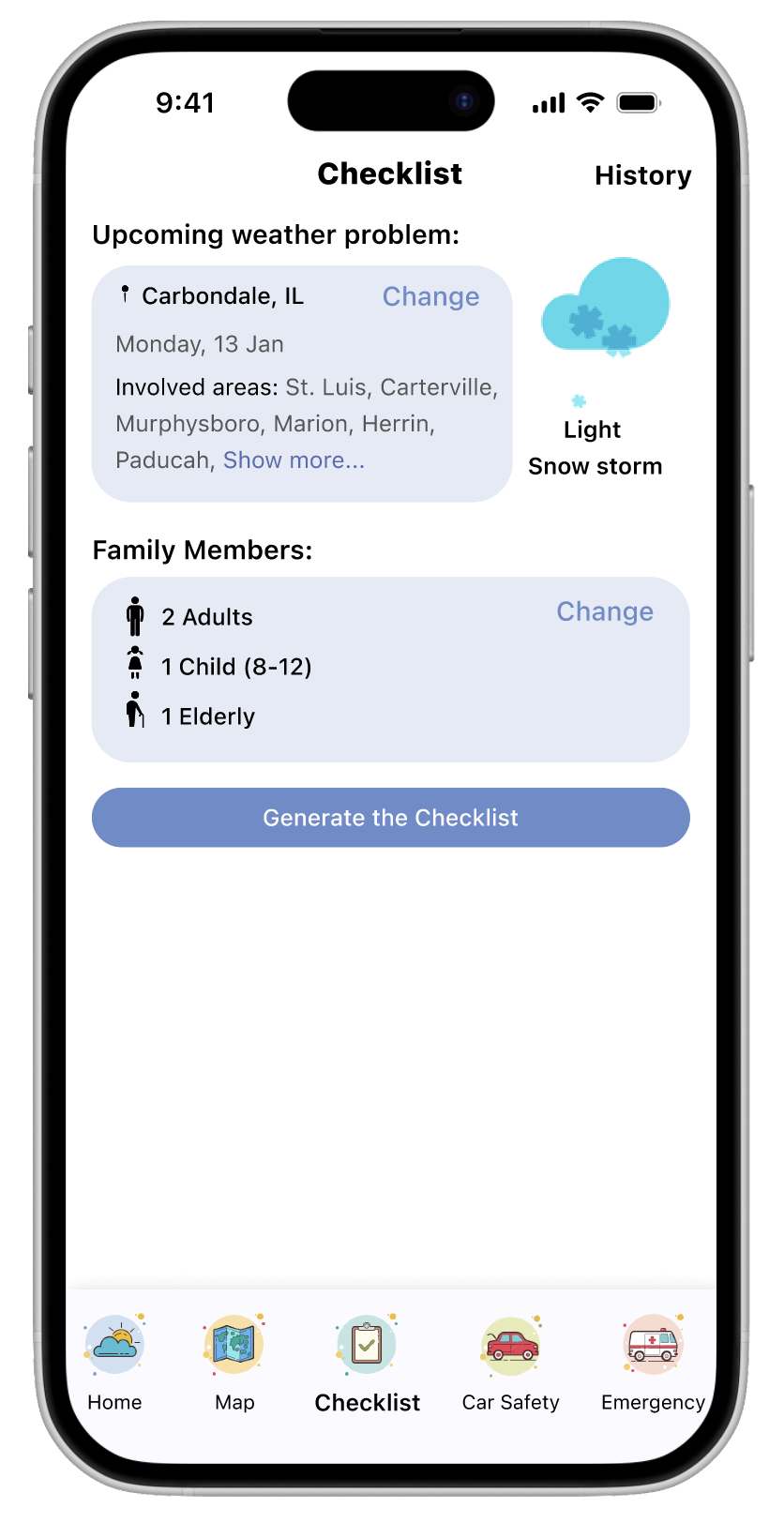
Users enter their location and household composition. For example, two adults, one child, one older adult, and one dog. Haven then generates a tailored preparation list.
Each item provides its purpose, quantity, and preparation status. Users can mark items as already available or identify what they still need to purchase.
Supporting Safer Vehicle Decisions
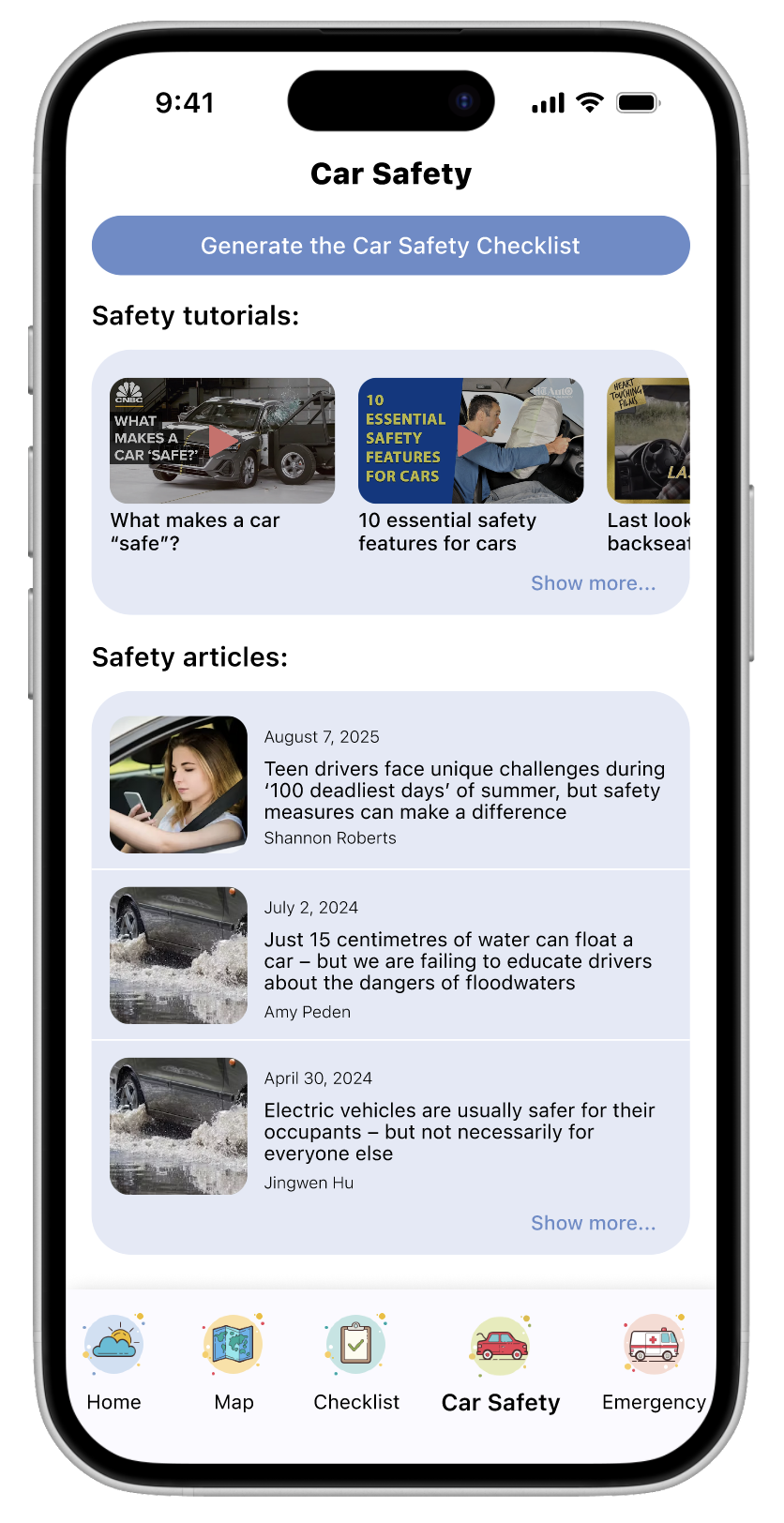
The Car Safety section includes a vehicle-specific checklist generator and access to practical tutorials and articles. It brings vehicle readiness into the same preparation experience as household supplies.

Creating Value:

Earlier Preparation
Turns changing weather conditions into family-specific actions before departure.

Family Specific Readiness
Accounts for children, older adults, pets, medical needs, and vehicle supplies.

What I Learned:
Insight
The most meaningful opportunity was preventing families from entering dangerous conditions unprepared.
Parents must manage children’s fear while solving urgent physical problems.
Blankets, chargers, kits, and weather apps each address only one part of the experience.
Every additional interaction becomes more difficult when users are anxious and their phones are losing power.

Clearer Crisis Decisions
Keeps essential safety and emergency actions visible when attention is limited.

Emotional Reassurance
Supports children and reduces one part of the parent’s cognitive burden.
Design Response
Connected weather alerts with personalized preparation checklists.
Added Kids Mode with music, stories, and guided breathing.
Connected preparation, safety, emergency, and reassurance in one product.
Prioritized persistent navigation, focused emergency actions, and Low Power Mode.