Roman Advanture
A family quest that invites visitors to discover Roman history through playful challenges across Parco Archeologico del Celio
Role:
Gamification and UI design
Timeline:
March - April, 2025
Highlights:
Linked color-coded signs to the web app
Made the museum the story’s final destination
Turned archaeological objects into interactive clues
Designed a flexible quest
Team:
1 UI Designer, 4 Graphic Designer
Tools:
Figma, Photoshop, Procreate
Category:
Gamification, UI design, Graphic Design
Problem:
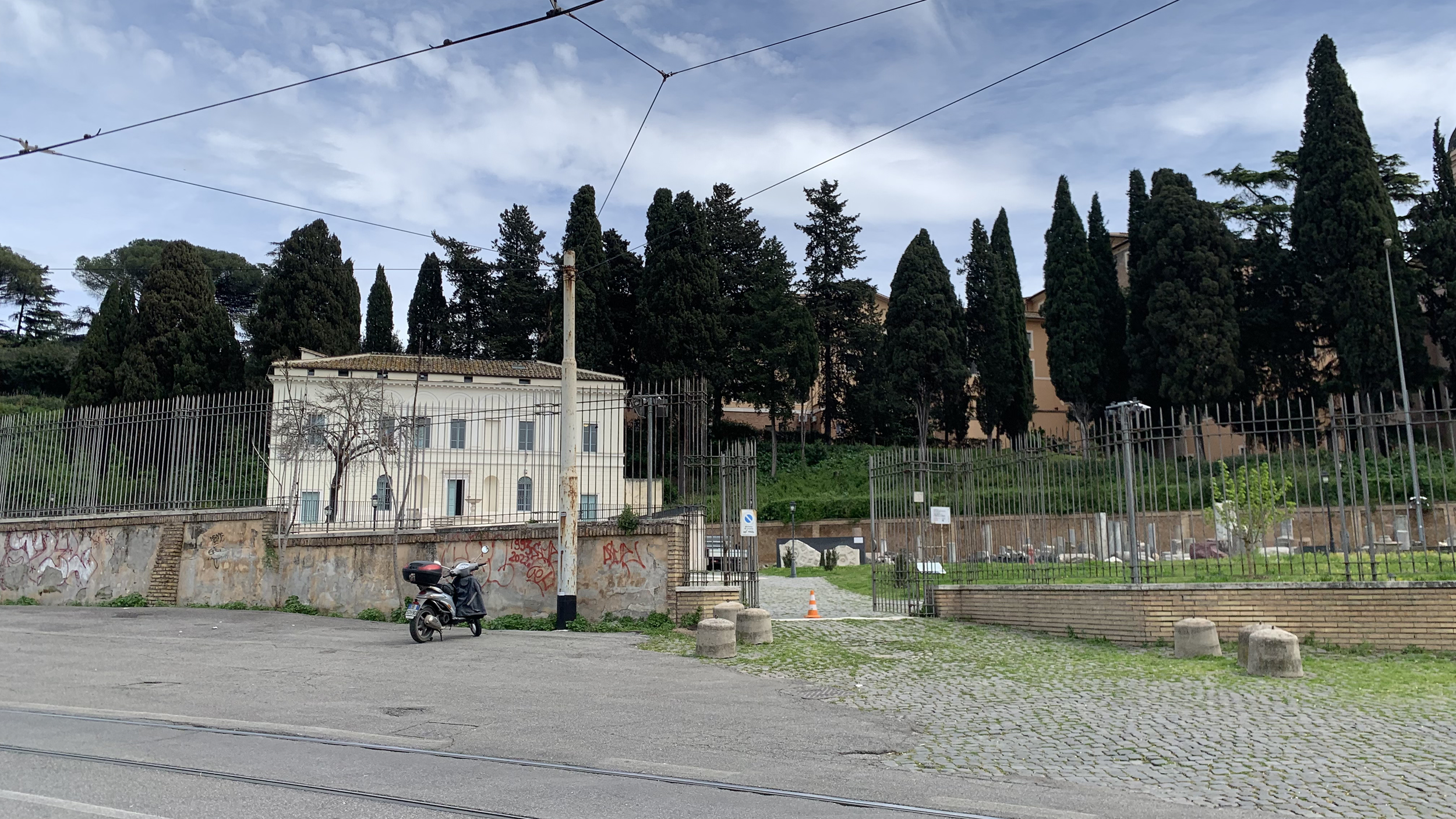
Parco Archeologico del Celio was easy for tourists to overlook and felt quiet once inside. Visitors had little guidance through the park, and the information signs offered children few ways to actively engage with what they saw. The nearby Museo della Forma Urbis was also easy to miss.

A park full of history, but little direction
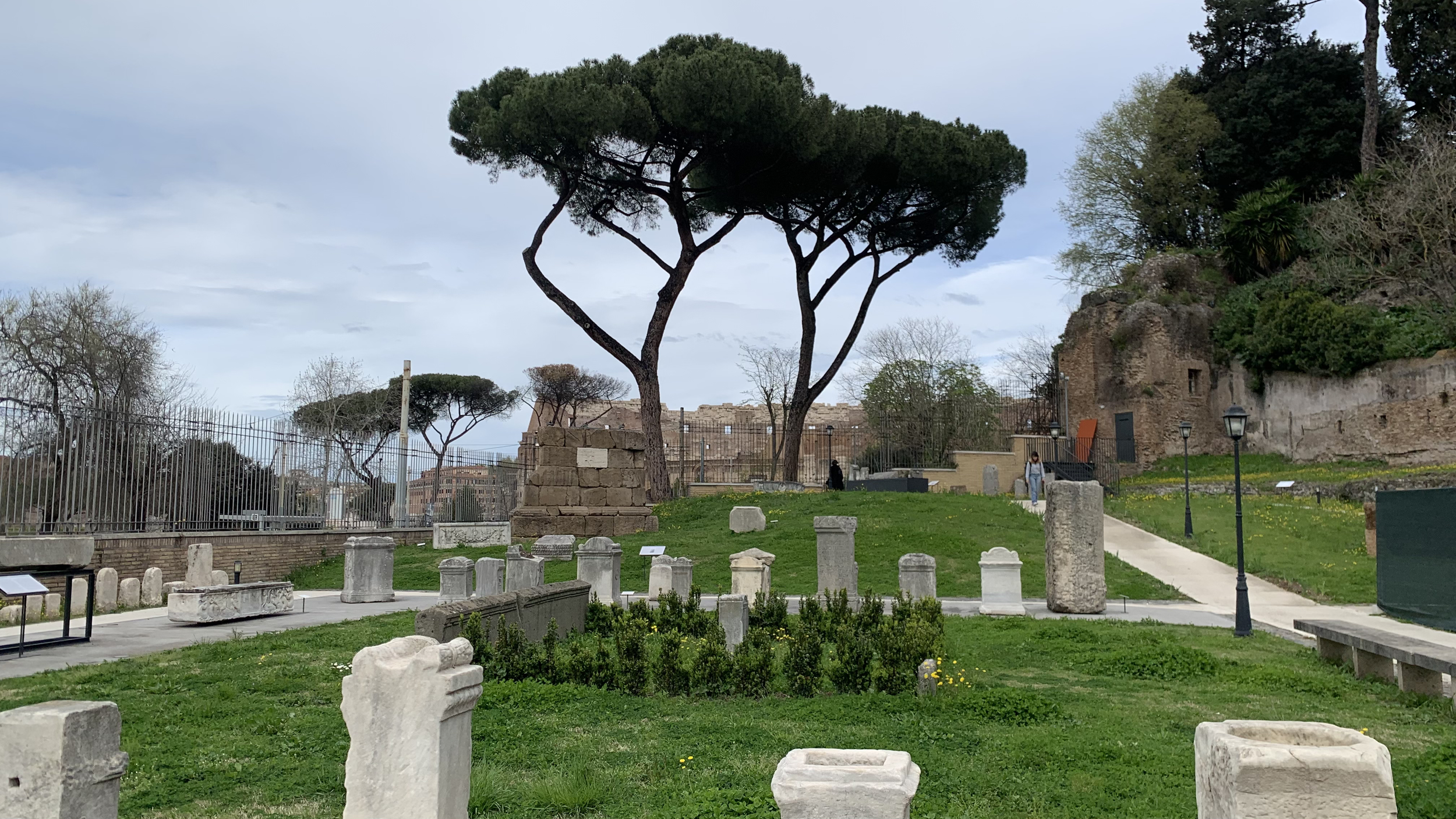
Parco Archeologico del Celio contains objects that can tell stories about ancient Rome. During our review of the site, our team found that those stories were not easy for visitors to discover. The park had low visibility, information was difficult to follow, and there was no clear flow through the space. The nearby Museo della Forma Urbis also felt disconnected from the visit.
How might we give families a reason to explore the park, learn from its objects, and continue their visit into the museum?

Turning exploration into a quest
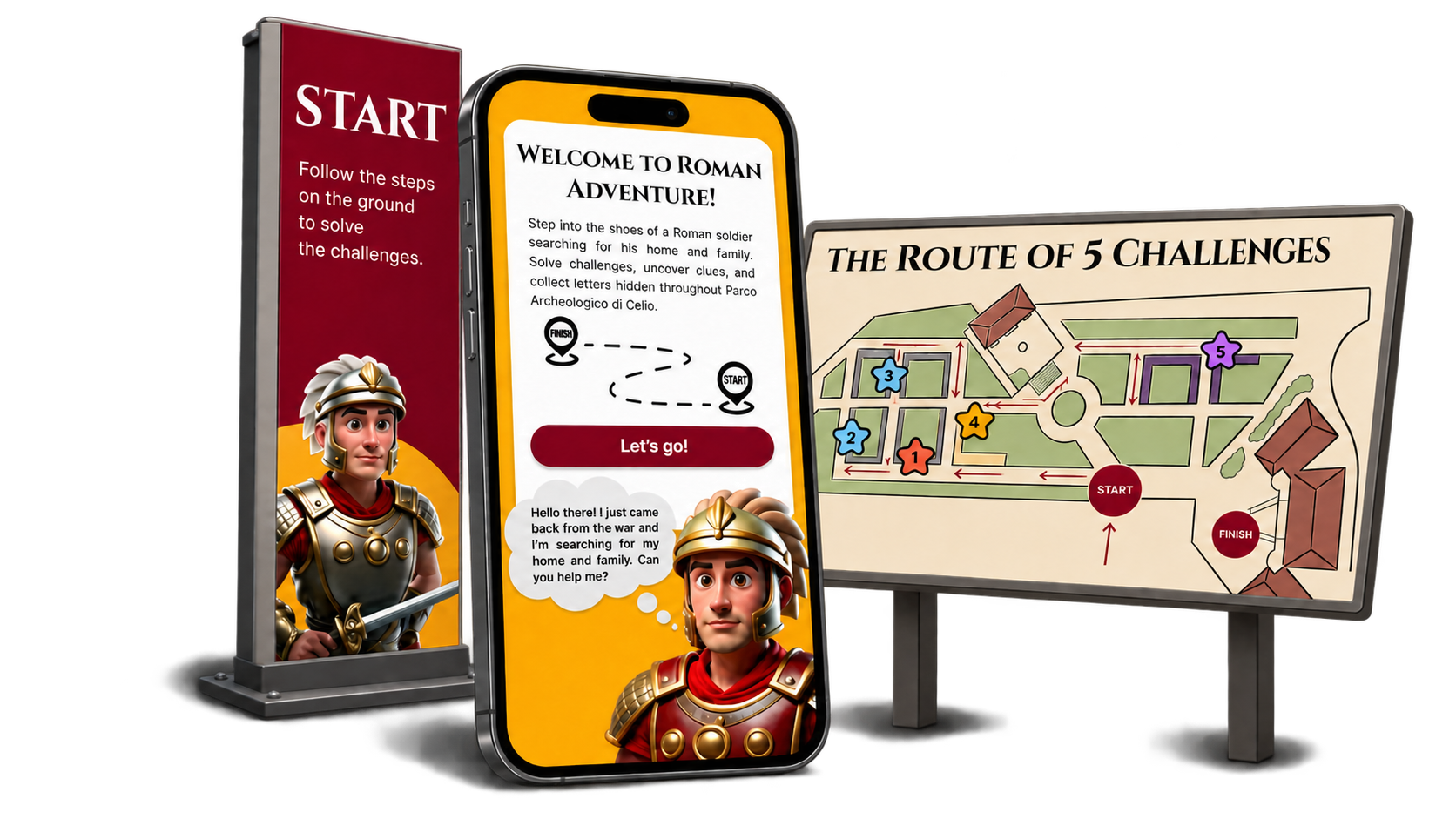
Our team developed Roman Adventure, a game in which visitors help a Roman legionnaire return home after a battle. My focus was on how the game would work for visitors: how they would begin, find challenges, solve them, collect clues, and understand what to do next.
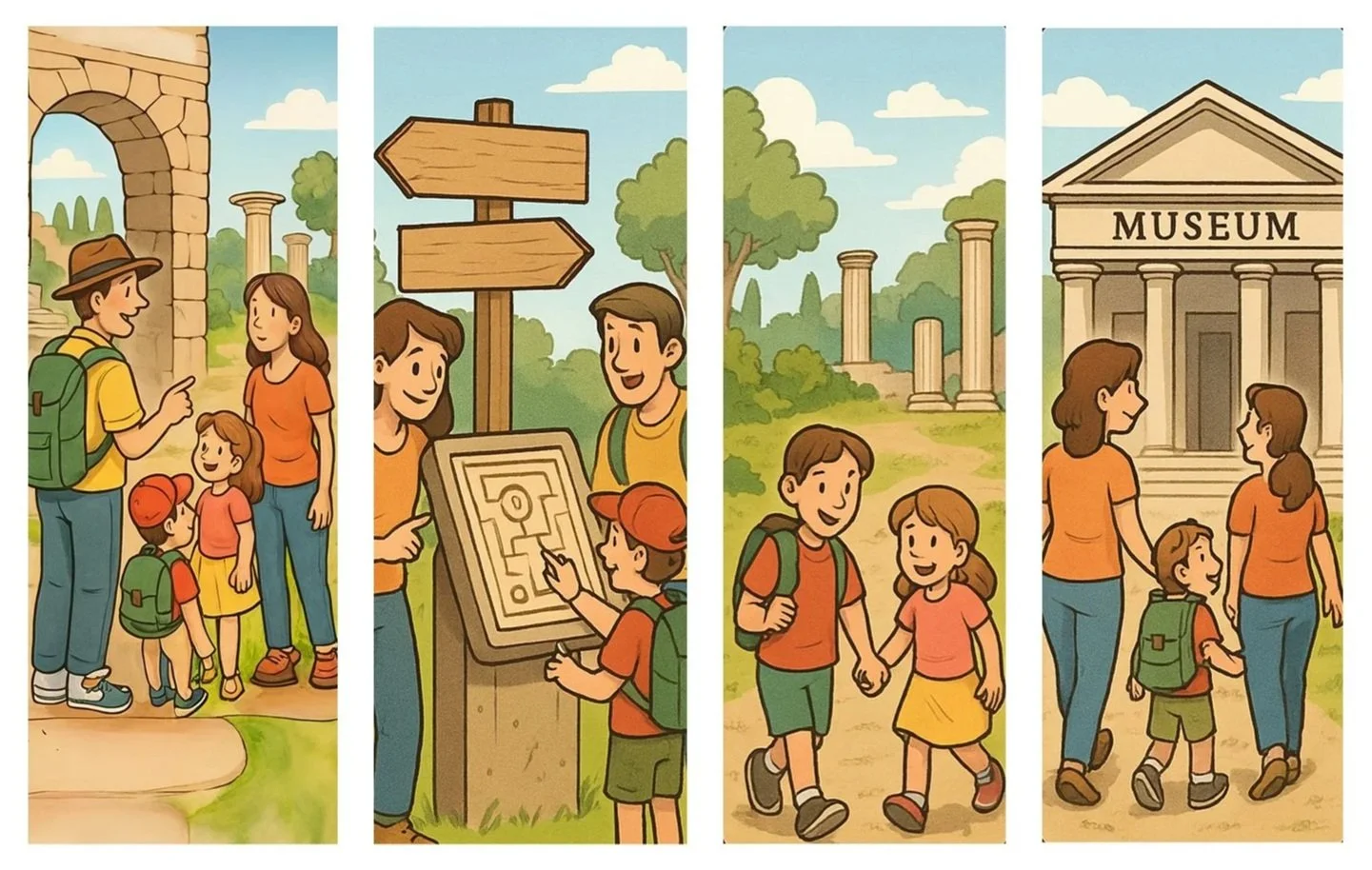
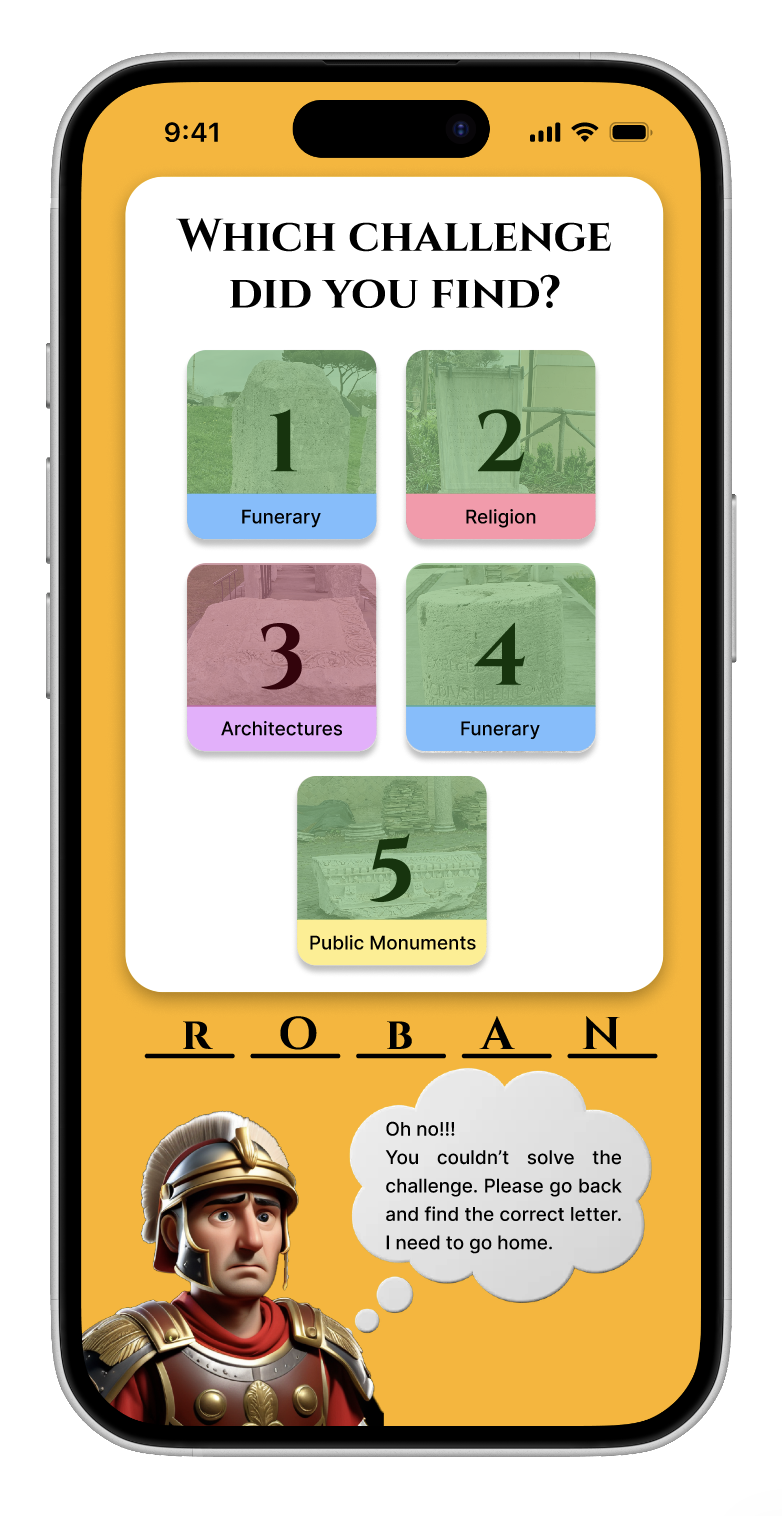
The quest has five challenges in different parts of the park. A suggested route offers direction, but visitors can complete them in any order. This gives families freedom to explore while keeping a clear goal: collect letters from the answers and use them to form ROMAN at the finish.

Making history part of the challenge
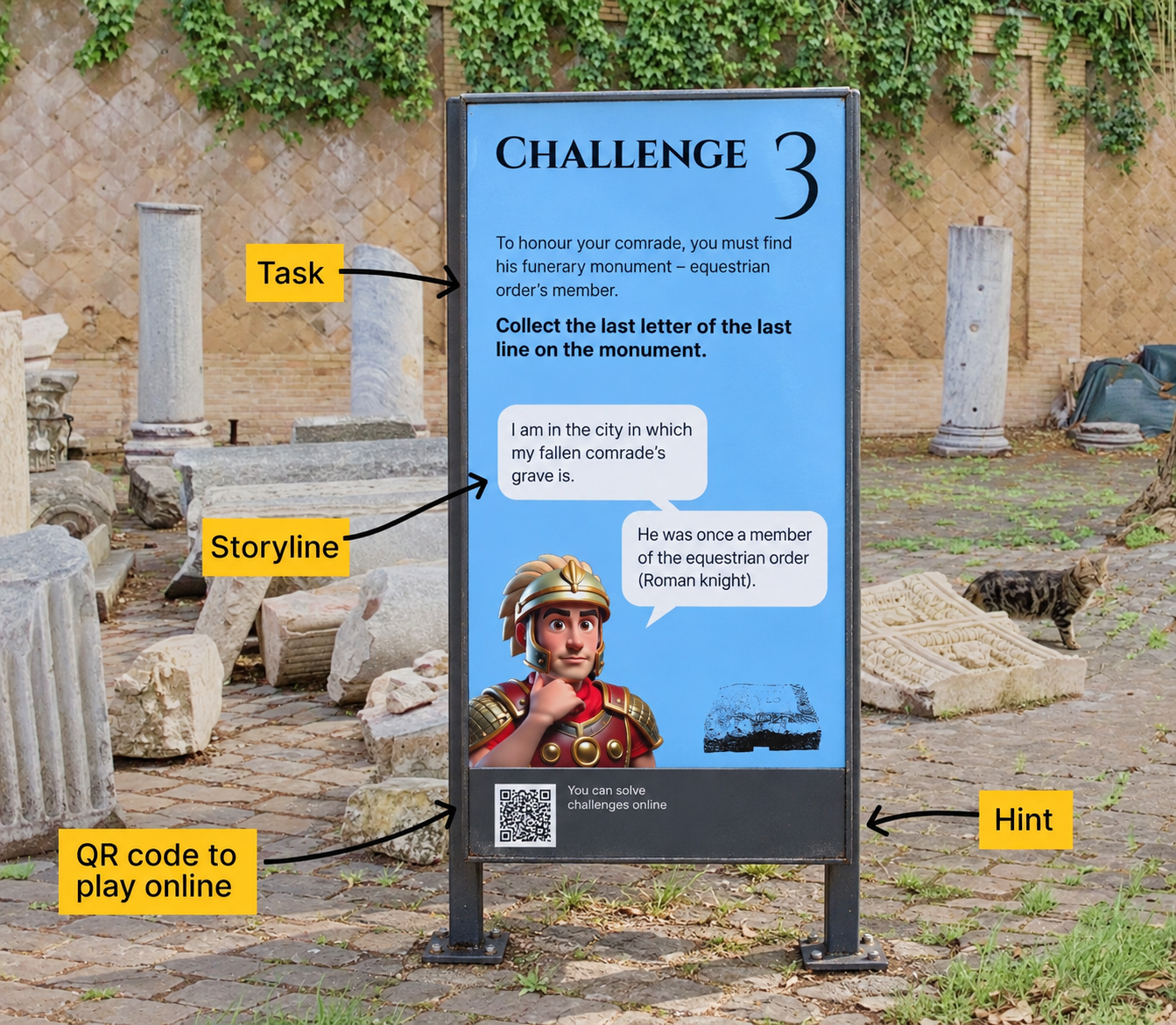
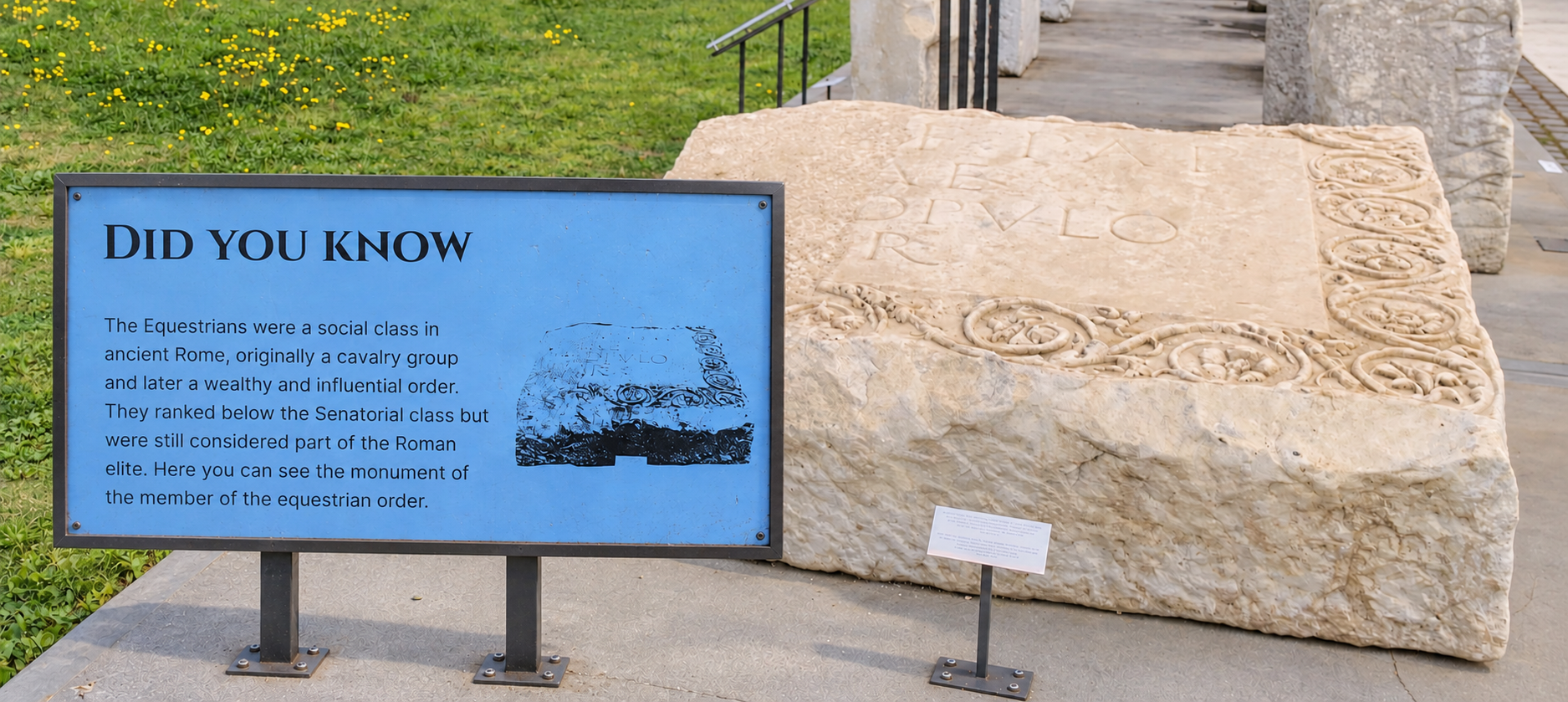
Each challenge connects to an object or piece of information on site. Visitors might search for a monument, solve a riddle, or answer a question using a nearby “Did You Know” sign. Matching colors link each challenge to its information sign.
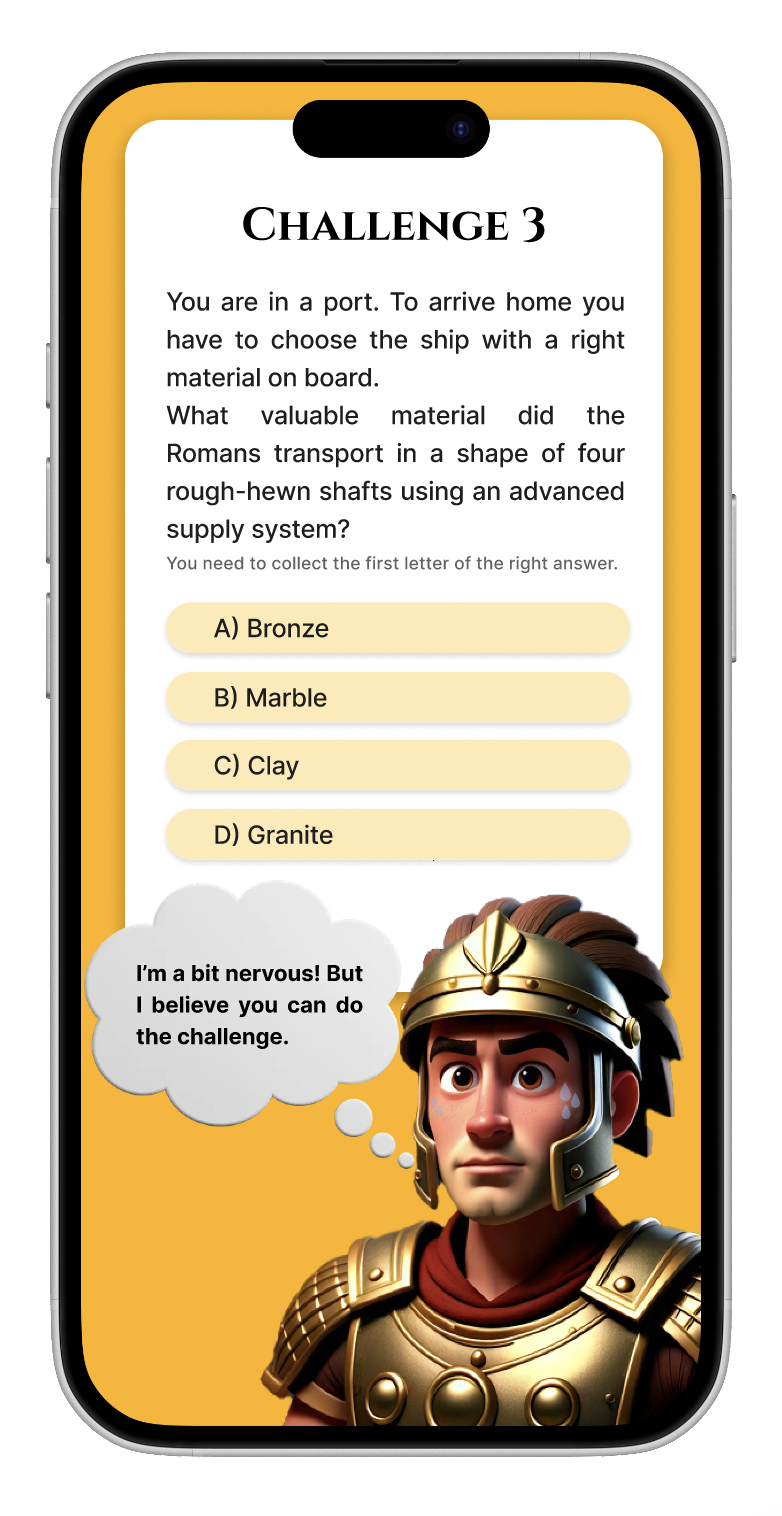
For example, one task directs visitors to a funerary monument belonging to a member of the equestrian order. Another asks about a material transported by the Romans; the nearby sign helps them discover the answer: marble. The clue only makes sense when visitors pay attention to the place around them.
That connection guided the game design. Rather than placing a story on top of the park, we used the park’s objects to move the story forward.

Designing the experience across the park and screen
The experience begins at the entrance, where signs introduce the legionnaire and explain how to play. The route map shows the five challenge areas. At each stop, a sign brings together the task, a hint, part of the character’s story, and a QR code.
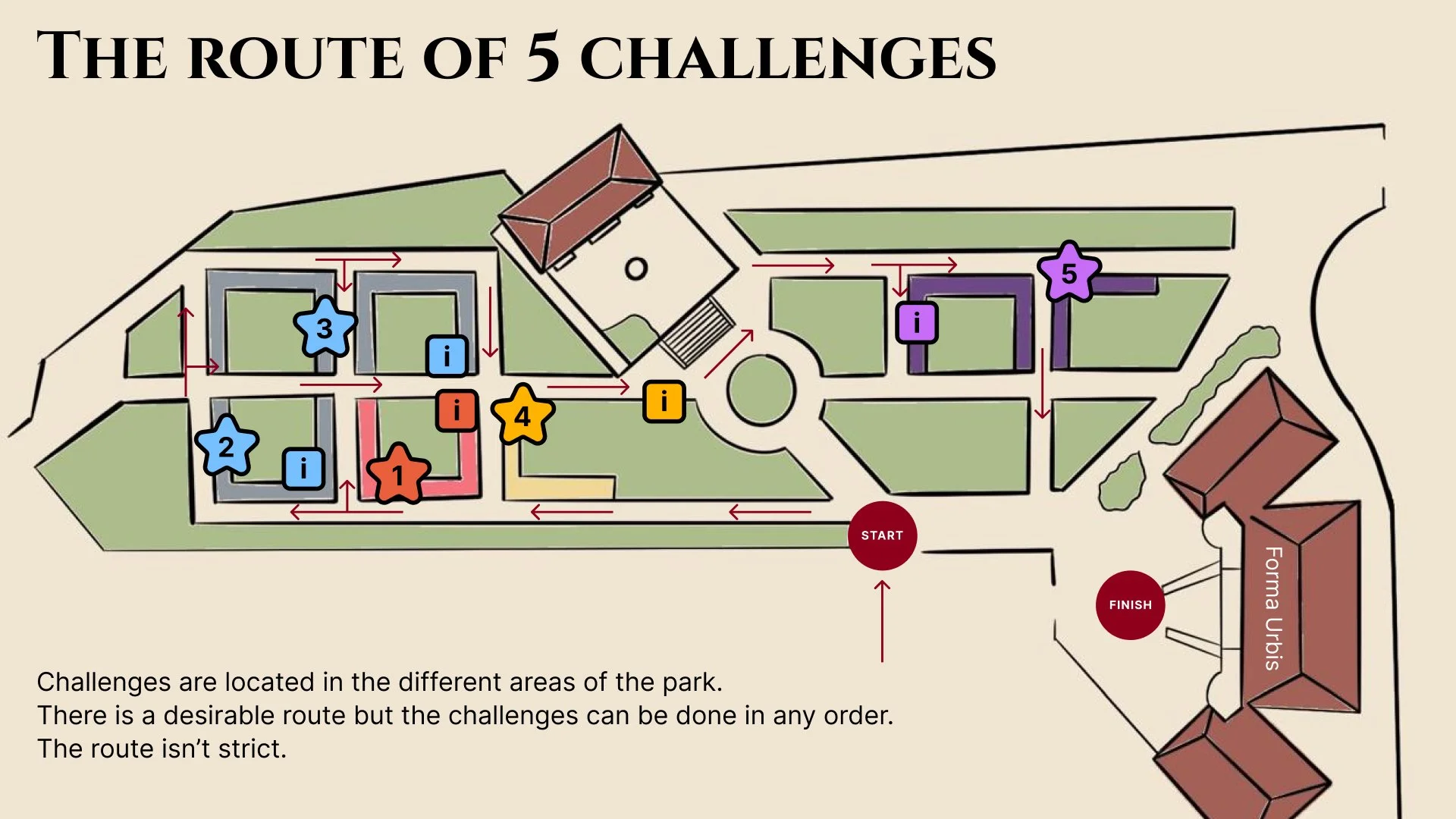
The experience begins at the entrance, where signs introduce the legionnaire and explain how to play. The route map shows the five challenge areas. At each stop, a sign brings together the task, a hint, part of the character’s story, and a QR code.
As the UI/UX designer, I focused on making that sequence easy to follow:
Start the quest → find a challenge → look for the answer → collect a letter → continue or finish.
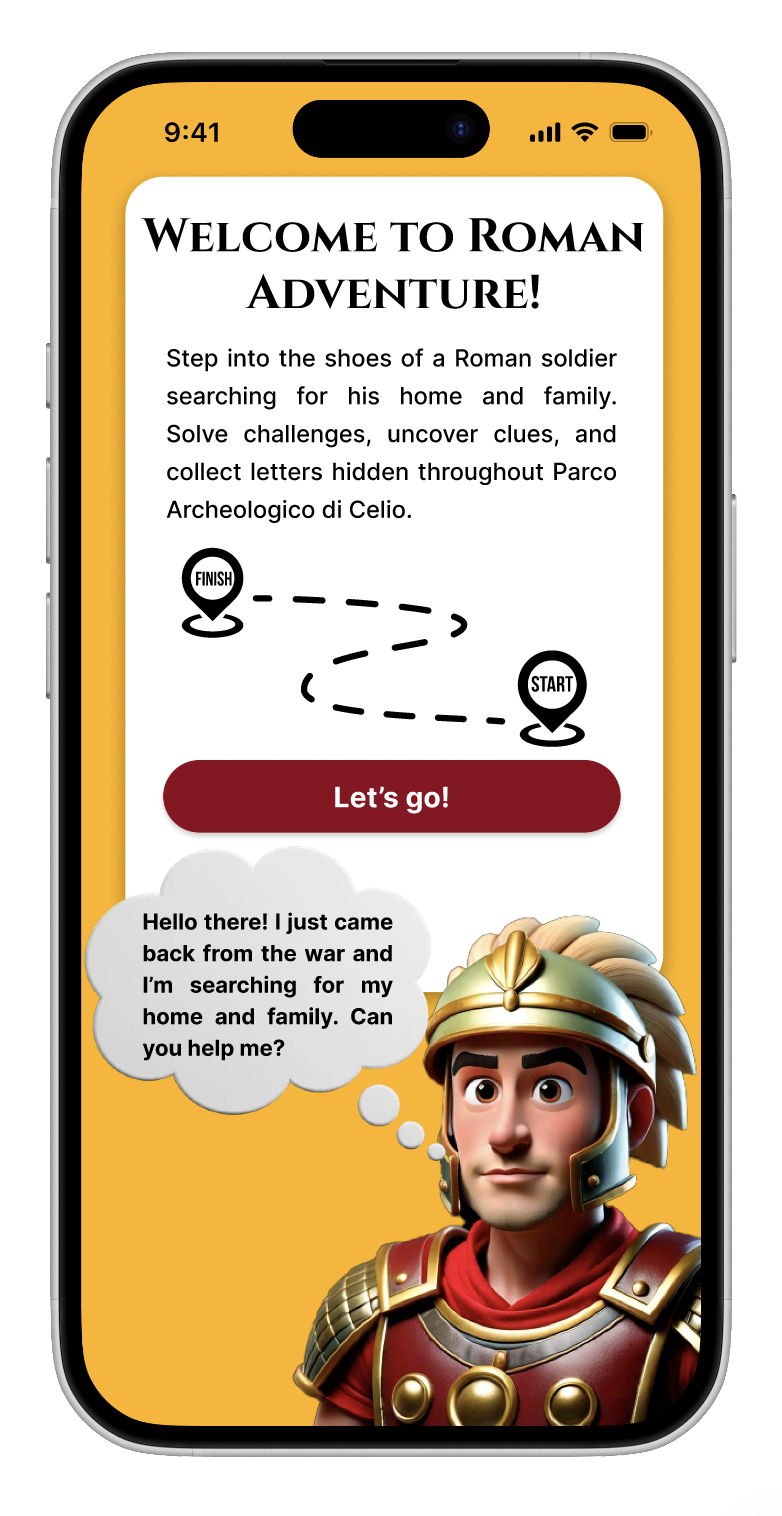
Visitors can play with the physical signs alone or use the web app. The digital flow introduces the game, lets players choose the challenge they found, answer questions, and follow their collected letters.

Giving the journey a meaningful ending
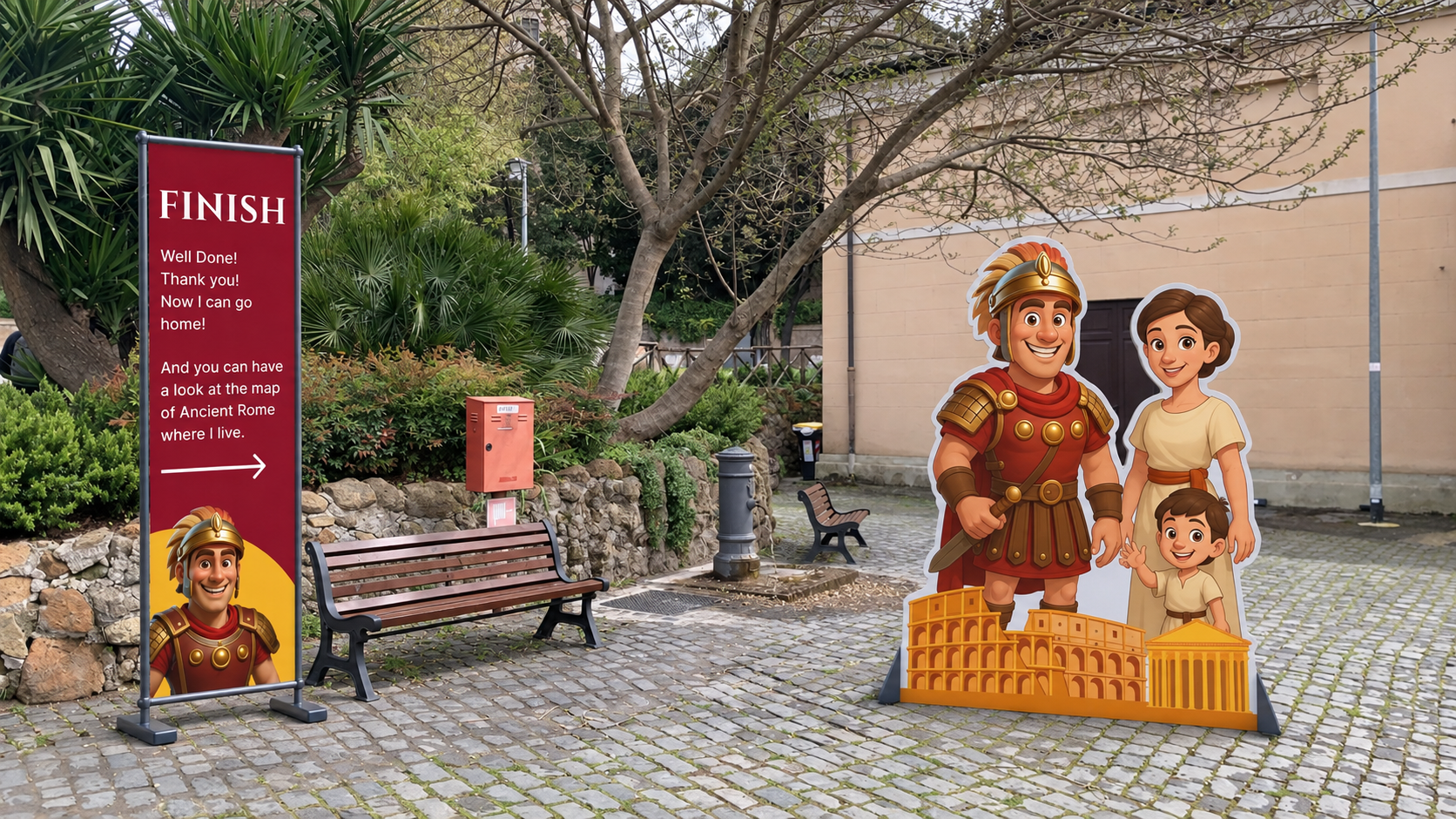
The final puzzle leads visitors toward the Museo della Forma Urbis. In the story, the legionnaire reaches his family and invites players to see the museum’s map of ancient Rome, his home.
This ending also responds to a problem we identified at the start. Instead of leaving the museum as a separate destination that visitors might overlook, the game gives them a reason to discover it.

What we created
By the end of the one-week workshop, our five-person team had developed the game concept, visitor journey, five-challenge route, map, entrance and challenge signs, information signs, final puzzle, and web app screens. My main contribution was shaping the game mechanics and UX so these pieces worked as one understandable experience.
The project showed me how gamification can encourage closer attention to a place. The goal was not simply to keep visitors playing; it was to make each clue a reason to stop, look, and learn.
What I Learned:
Turn real objects into meaningful clues.
Give visitors freedom within a clear route.
Keep the quest easy to follow on site.
Connect physical signs and screens into one experience.